Chiari Malformation: Symptoms & Surgical Treatment | Dr Abhinav Agrahari
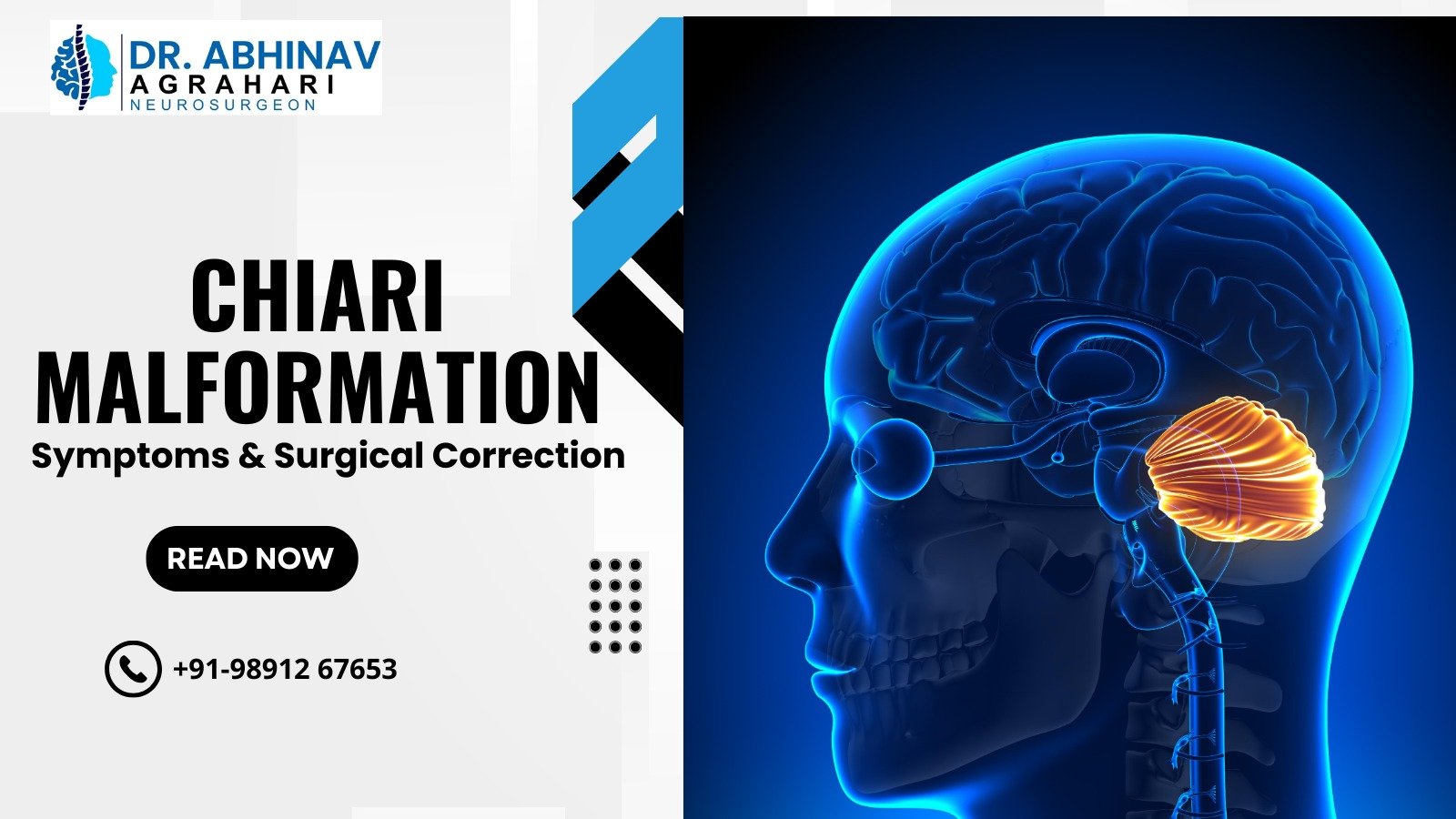
Living with unexplained headaches, neck pain, or balance issues can be frustrating, especially when answers seem elusive. For some individuals, these symptoms point to a condition called Chiari malformation—a structural defect where brain tissue extends into the spinal canal. While this sounds alarming, understanding the condition and knowing that effective surgical treatments exist can bring hope and relief.
What Is Chiari Malformation?
Chiari malformation occurs when the lower part of the brain, specifically the cerebellar tonsils, pushes down through the opening at the base of the skull into the spinal canal. Normally, only the spinal cord occupies this space. This displacement can interfere with the normal flow of cerebrospinal fluid (CSF), the protective liquid that cushions your brain and spinal cord.
The condition is often present from birth, though symptoms may not appear until adolescence or adulthood. Some people live their entire lives without knowing they have it, while others experience debilitating symptoms that significantly impact their quality of life.
Recognizing the Symptoms
Symptoms of Chiari malformation vary widely depending on the severity of the condition and how much it affects CSF flow. Many patients describe a distinctive headache at the back of the head that worsens with coughing, sneezing, or straining. This happens because these actions temporarily increase pressure in the brain.
Other common symptoms include neck pain, balance problems, dizziness, difficulty swallowing, hoarseness, numbness or tingling in the hands and feet, and muscle weakness. Some individuals experience vision problems, ringing in the ears, or sleep apnea. In children, symptoms might include developmental delays, difficulty swallowing, excessive drooling, or irritability.
Because these symptoms can mimic other conditions, consulting a Best Neurosurgeon in South Delhi with expertise in Chiari malformation is essential for accurate diagnosis. Dr Abhinav Agrahari specializes in evaluating and treating complex neurological conditions, ensuring patients receive personalized care tailored to their unique situation.
How Is Chiari Malformation Diagnosed?
Diagnosis typically begins with a thorough medical history and neurological examination. If Chiari malformation is suspected, imaging studies become crucial. An MRI (Magnetic Resonance Imaging) is the gold standard, as it provides detailed images of the brain and spinal cord, clearly showing whether cerebellar tissue has descended into the spinal canal.
Additional tests may include a CSF flow study to assess how well cerebrospinal fluid moves around the brain and spinal cord. This information helps determine the severity of the condition and whether surgical intervention is necessary.
Understanding Surgical Correction
Not everyone with Chiari malformation requires surgery. Some individuals with mild symptoms manage well with pain medications, physical therapy, and regular monitoring. However, when symptoms are severe, progressive, or when the condition causes syringomyelia (a fluid-filled cyst in the spinal cord), surgery becomes the recommended treatment.
The most common surgical procedure is called posterior fossa decompression. During this surgery, a Best Neurosurgeon in South Delhi like Dr Abhinav Agrahari removes a small portion of bone at the back of the skull to create more space for the brain. In some cases, a section of the first vertebra may also be removed. This additional space allows the cerebellar tonsils to return to a more normal position and restores proper CSF flow.
The surgeon may also open the protective covering of the brain (dura mater) and place a patch to expand this membrane, further increasing space. This technique helps reduce pressure on the brain and spinal cord.
According to the National Institute of Neurological Disorders and Stroke, surgical outcomes for Chiari malformation are generally positive, with many patients experiencing significant symptom relief and improved quality of life after the procedure (NINDS Chiari Malformation Information Page).
What to Expect After Surgery
Recovery from Chiari malformation surgery typically involves a hospital stay of two to four days. Most patients experience some neck pain and headaches initially, which gradually improve over weeks to months. Physical therapy often plays an important role in recovery, helping patients regain strength and mobility.
While surgery doesn't cure all symptoms immediately, many patients notice gradual improvement in headaches, pain, and neurological symptoms over time. Some symptoms, particularly those related to nerve damage, may improve more slowly or incompletely.
Working with an experienced Best Neurosurgeon in South Delhi ensures comprehensive preoperative planning, skilled surgical execution, and attentive postoperative care—all critical factors in achieving the best possible outcome.
Living with Chiari Malformation
Whether you choose surgical treatment or conservative management, living with Chiari malformation means staying informed and proactive about your health. Regular follow-up appointments, imaging studies, and open communication with your medical team help ensure the condition remains stable.
Dr Abhinav Agrahari emphasizes the importance of patient education and shared decision-making. Understanding your condition empowers you to make informed choices about treatment options and lifestyle modifications that support your well-being.
If you're experiencing symptoms that might indicate Chiari malformation, don't wait to seek expert evaluation. Early diagnosis and appropriate treatment can prevent complications and improve your quality of life. Reach out to a Best Neurosurgeon in South Delhi who specializes in this condition to discuss your symptoms and explore your options.
Frequently Asked Questions
Q1: Can Chiari malformation develop later in life?
While most cases are congenital, symptoms often don't appear until adulthood, sometimes triggered by trauma or spinal fluid issues.
Q2: Is Chiari malformation hereditary?
There may be a genetic component, though most cases occur sporadically without clear family history patterns.
Q3: How long does recovery from surgery take?
Most patients return to normal activities within 4-6 weeks, though complete recovery may take several months.
Q4: Can Chiari malformation be detected before symptoms appear?
Yes, it's sometimes discovered incidentally on brain imaging performed for unrelated reasons.
Q5: Will I need multiple surgeries?
Most patients require only one surgery, though a small percentage may need revision if symptoms recur.