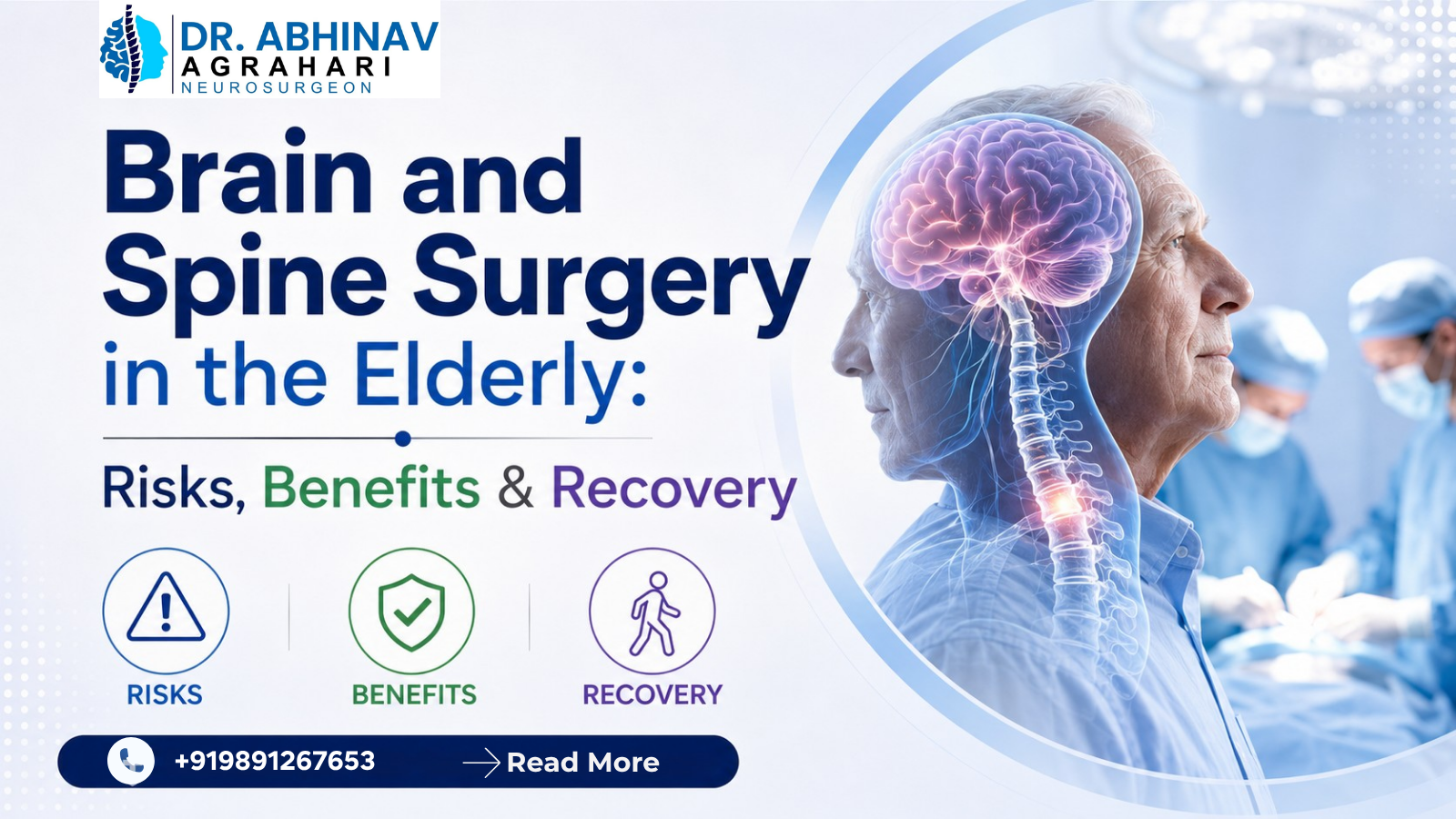
Brain and Spine Surgery in the Elderly: Risks, Benefits & Recovery
Age is not a diagnosis. Yet when a doctor recommends brain or spine surgery for a patient in their 70s or 80s, the first reaction from most families is fear. "Is it safe at this age?" "Will they survive the operation?" "Is it really worth the risk?"
These are valid questions — and they deserve honest, informed answers.
Modern neurosurgery has advanced dramatically. Elderly patients today are successfully undergoing complex brain and spine procedures with outcomes that would have seemed impossible two decades ago. But surgery in older adults does carry unique considerations that both patients and families must understand before making a decision.
Why Elderly Patients Need Brain or Spine Surgery
The ageing brain and spine are vulnerable to a range of conditions that may eventually require surgical intervention. These include:
Brain tumours — both benign and malignant, which can cause seizures, headaches, and neurological deficits
Subdural haematoma — blood pooling between the brain and skull, often after a minor fall
Spinal stenosis — narrowing of the spinal canal causing pain, numbness, and loss of mobility
Herniated discs — pressing on nerves and causing severe radiating pain or weakness
Spinal fractures — resulting from osteoporosis or trauma
Hydrocephalus — excess cerebrospinal fluid causing confusion, incontinence, and gait problems
In many of these cases, surgery is not optional — it is necessary to prevent paralysis, permanent neurological damage, or death.
The Real Risks: What Families Must Know
It is important to be honest. Surgery in elderly patients carries a higher baseline risk than in younger patients, and that risk increases with age, frailty, and the presence of other medical conditions.
Key surgical risks in elderly patients include:
Anaesthesia complications — Older adults metabolise anaesthetic agents more slowly. Post-operative cognitive dysfunction (POCD), a temporary but sometimes prolonged state of confusion, is a known risk, particularly after general anaesthesia.
Cardiovascular stress — Surgery places a significant strain on the heart. Elderly patients with hypertension, diabetes, or pre-existing heart disease require careful pre-operative cardiac evaluation.
Infection and healing — The immune system weakens with age, making post-surgical infections more likely and wound healing slower.
Bleeding risks — Many elderly patients are on blood thinners for cardiac conditions, which must be carefully managed around the time of surgery.
Prolonged immobility complications — Bed rest after surgery can trigger pneumonia, deep vein thrombosis, and pressure sores more rapidly in older patients.
Families in areas like Okhla, Jamia Nagar, and Jasola in South Delhi should discuss these risks in detail with the best neurosurgeon in Okhla before proceeding with any surgical decision.
The Real Benefits: Why Surgery Is Often Worth It
Despite the risks, the benefits of timely surgery can be life-changing — and life-saving — for elderly patients.
Pain relief is perhaps the most immediate benefit. Conditions like spinal stenosis and herniated discs can cause debilitating chronic pain that destroys quality of life. Surgery can deliver relief that no amount of medication or physiotherapy can match.
Restoration of mobility and independence is equally significant. An elderly patient who cannot walk due to spinal compression may regain the ability to move independently after a successful decompression surgery — transforming their daily existence and reducing carer burden.
Prevention of irreversible damage is critical in time-sensitive conditions. A subdural haematoma left untreated can cause permanent brain damage or death. Surgical drainage in these cases is not elective — it is urgent.
Extended quality of life is the ultimate goal. When surgery is appropriately planned and performed by an experienced team, elderly patients can return to meaningful, active lives for years afterward.
How Surgeons Assess Surgical Fitness in Elderly Patients
Responsible neurosurgeons do not simply look at age — they assess biological age and functional reserve. Key pre-operative evaluations include:
- Comprehensive cardiac and pulmonary assessment
- Nutritional status and frailty scoring
- Cognitive baseline testing
- Review of all medications, particularly blood thinners and diabetic drugs
- Imaging studies (MRI, CT, angiography) to map the exact surgical territory
- Discussion of anaesthesia type — many spine procedures can now be done under regional or local anaesthesia, avoiding general anaesthesia entirely
Patients across Saket, Malviya Nagar, and Kalkaji trust the best spine surgeon treatment in South Delhi for this thorough pre-operative workup, which significantly improves surgical safety and outcome prediction.
Recovery: Setting Realistic Expectations
Recovery after brain or spine surgery in elderly patients is slower than in younger patients — but it is absolutely achievable with the right support.
In the hospital, Most patients spend 3–7 days post-operatively, with close monitoring of neurological function, blood pressure, and wound healing.
Early rehabilitation: Physiotherapy begins as early as day one or two after surgery. Early mobilisation prevents complications and accelerates recovery.
At home: The home environment must be prepared — grab bars, raised toilet seats, non-slip mats, and accessible sleeping arrangements make a significant difference.
Cognitive recovery: If POCD occurs, most patients gradually return to their cognitive baseline within weeks to months. Stimulating activities, social engagement, and adequate sleep all support brain recovery.
Nutrition and hydration: These are critical but frequently underestimated. Protein-rich diets, adequate fluid intake, and vitamin D supplementation support both wound healing and neurological recovery.
Patients from Tughlakabad, Govindpuri, and neighbouring localities can consult the best neurosurgeon doctor in Okhla for a structured post-operative rehabilitation plan tailored to the elderly patient's needs and home situation.
Minimally Invasive Surgery — A Game Changer for the Elderly
One of the most significant advances in neurosurgery for older patients is the rise of minimally invasive techniques. These include:
Endoscopic spine surgery through tiny incisions
Stereotactic radiosurgery (like Gamma Knife) for brain tumours — no incision at all
Percutaneous vertebroplasty for spinal fractures
Neuro-navigation guided surgery for precision tumour removal
These approaches mean less blood loss, shorter hospital stays, reduced infection risk, and faster recovery — making surgery a viable and safer option for patients who might previously have been turned away.
When Surgery May Not Be the Right Choice
Honest neurosurgical care also means knowing when not to operate. In cases where the patient has severe frailty, multiple organ failure, or advanced dementia, the risks of surgery may outweigh any potential benefit. In these situations, palliative care and pain management become the priority, and a compassionate, experienced surgeon will guide families through these conversations with clarity and sensitivity.
Conclusion: Age Alone Is Never the Answer
The question is never simply "Is this patient too old for surgery?" The real question is: "Is this patient strong enough, and is the benefit worth the risk given their specific condition and goals?"
With thorough pre-operative planning, minimally invasive techniques, experienced hands, and robust post-operative care, elderly patients can and do achieve excellent outcomes from brain and spine surgery.
If you are facing this decision for a loved one in South Delhi, consult the best spine surgeon in South Delhi for an honest, personalised assessment that puts the patient's quality of life at the centre of every recommendation.
In surgery, as in life, age is just one chapter, not the whole story.
FAQs
Q1. Is brain surgery safe for patients above 75?
Yes, with thorough pre-operative assessment and modern minimally invasive techniques, selected patients above 75 can undergo brain surgery safely.
Q2. How long does recovery take after spine surgery in elderly patients?
Most patients begin walking within days, with full recovery taking 6–12 weeks, depending on the procedure and overall health.
Q3. Can spine surgery relieve chronic back pain in older adults?
Yes. Procedures like spinal decompression or fusion can provide significant, long-lasting pain relief when conservative treatments have failed.
Q4. What is minimally invasive spine surgery?
It is a surgery performed through very small incisions using specialised instruments, resulting in less pain, minimal blood loss, and faster recovery.
Q5. When should I seek a neurosurgeon's opinion for an elderly family member?
Seek immediate evaluation if the person experiences sudden weakness, loss of bladder control, severe headache, or rapidly worsening back pain.

