
Normal Pressure Hydrocephalus (NPH): Symptoms, Diagnosis & Treatment
Introduction
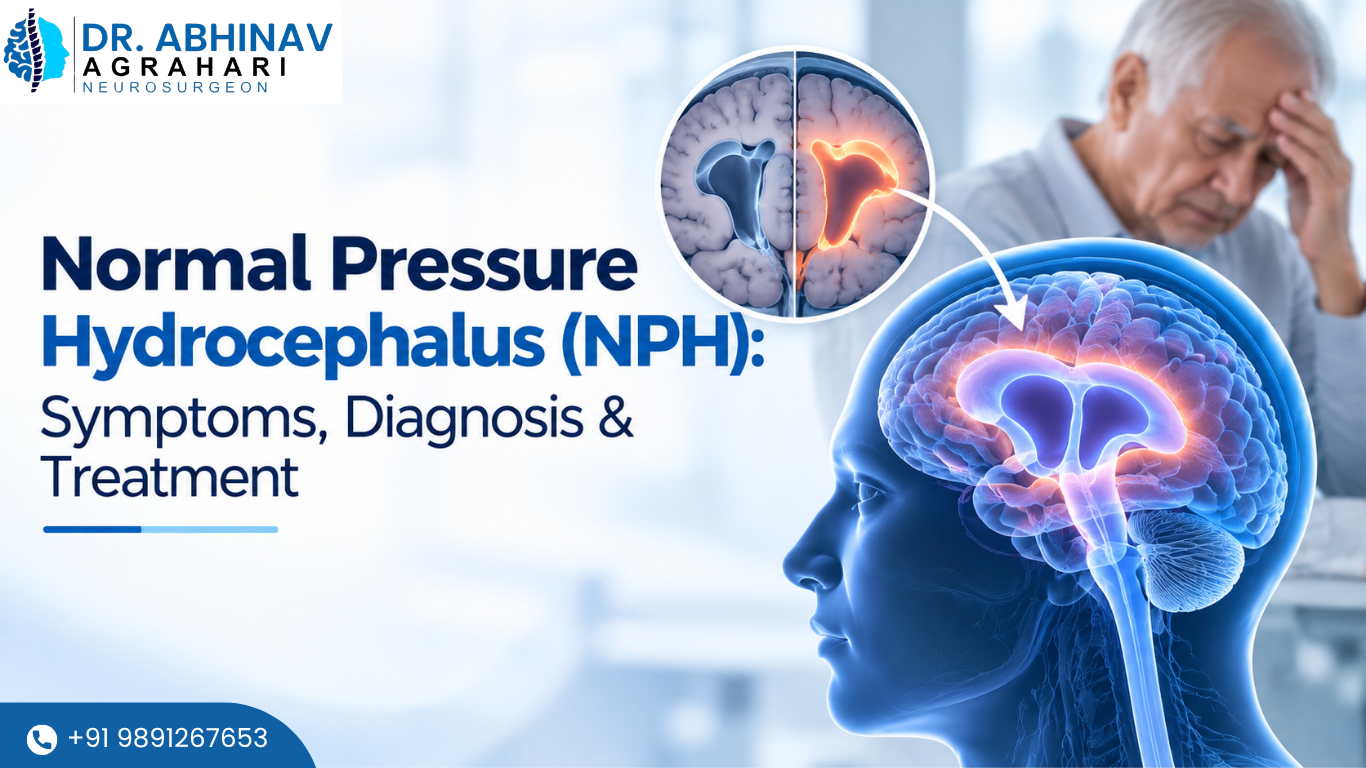
Normal Pressure Hydrocephalus (NPH) is a neurological condition in which excess cerebrospinal fluid (CSF) accumulates in the brain's ventricles, causing them to enlarge. Despite the increased fluid, the pressure measured during testing may remain within a relatively normal range, which is why the condition is called “normal pressure” hydrocephalus.
NPH most commonly affects older adults and can cause problems with walking, memory, thinking, and bladder control. Because these symptoms can resemble other conditions associated with aging, early evaluation by a Best Neurosurgeon doctor in Okhla can help identify the underlying cause and determine whether treatment may be appropriate.
What Is Normal Pressure Hydrocephalus?
Cerebrospinal fluid surrounds and protects the brain and spinal cord. It is continuously produced, circulated, and absorbed. In NPH, this normal circulation or absorption of CSF becomes impaired, leading to a gradual accumulation of fluid within the brain.
The enlarged ventricles can affect nearby brain structures involved in movement, balance, cognition, and bladder control. A Best Neurosurgeon doctor in Okhla may assess these symptoms along with imaging findings to determine whether NPH is a possible cause.
NPH can occur without an obvious cause, known as idiopathic NPH. It can also develop following conditions such as head injury, brain surgery, meningitis, or bleeding around the brain.
Symptoms of Normal Pressure Hydrocephalus
NPH typically develops gradually. The main symptoms are often described as a clinical triad:
1. Walking and Balance Problems
Walking difficulty is frequently one of the earliest signs. A person may take short, slow steps, have difficulty initiating movement, feel unsteady, or appear as though their feet are stuck to the floor.
These changes can increase the risk of falls. If progressive walking problems occur without an obvious explanation, consultation with a Best Neurosurgeon doctor in Okhla may be recommended.
2. Cognitive Changes
NPH may affect memory, concentration, attention, and the ability to perform everyday tasks. Some people may become slower in their thinking or have difficulty organizing activities.
Because these symptoms can overlap with dementia and other neurological conditions, a detailed assessment is important before diagnosing NPH.
3. Bladder Problems
Urinary urgency or increased frequency may develop as the condition progresses. In some patients, urinary incontinence can occur.
Not everyone with NPH experiences all three symptoms, and their severity can vary from person to person.
How Is NPH Diagnosed?
Diagnosing NPH usually requires a combination of medical history, neurological examination, brain imaging, and sometimes specialized CSF testing.
Brain Imaging
MRI or CT scans can show enlarged ventricles and help doctors look for other possible causes of the symptoms. MRI may provide additional information about changes in the brain associated with CSF circulation.
A Best Neurosurgeon doctor in Okhla may review the patient's symptoms alongside imaging findings rather than relying on a scan alone.
Neurological and Cognitive Assessment
The patient's walking pattern, balance, memory, attention, and bladder symptoms may be evaluated. Baseline testing can also help doctors monitor changes after treatment.
CSF Drainage Tests
In selected patients, doctors may perform a lumbar puncture or a controlled CSF drainage test. The patient's walking or cognitive function may be assessed before and after fluid removal.
A noticeable improvement after CSF drainage can provide useful information when determining whether a patient may benefit from surgery.
Treatment for Normal Pressure Hydrocephalus
Treatment depends on the patient's symptoms, overall health, diagnostic findings, and expected response to therapy.
Ventriculoperitoneal (VP) Shunt
For appropriate patients, the most common surgical treatment is placement of a ventriculoperitoneal shunt. The shunt diverts excess CSF from the brain's ventricles to the abdomen, where the fluid can be absorbed naturally.
A Best Neurosurgeon doctor in Okhla can evaluate whether shunt surgery is suitable and discuss the potential benefits and risks with the patient.
Modern shunt systems may include adjustable valves that allow the drainage setting to be modified after surgery when necessary.
Follow-Up After Treatment
Improvement may occur gradually after shunt surgery. Walking and balance symptoms may respond differently from cognitive or bladder symptoms. Regular follow-up is important to monitor symptoms and check the functioning of the shunt.
Patients should promptly report new or worsening headaches, vomiting, excessive sleepiness, seizures, fever, wound problems, or sudden neurological changes.
Why Early Evaluation Matters
NPH is important to recognize because some symptoms may improve with appropriate treatment. However, similar symptoms can occur in Parkinson's disease, Alzheimer's disease, vascular disorders, spinal problems, and other neurological conditions.
For this reason, people experiencing progressive walking difficulty, unexplained cognitive changes, or urinary problems should undergo appropriate medical evaluation. Consulting a Best Neurosurgeon doctor in Okhla can help determine whether NPH or another neurological condition may be responsible.
FAQs
1. What are the main symptoms of Normal Pressure Hydrocephalus?
The classic symptoms include difficulty walking, cognitive or memory changes, and urinary urgency or incontinence. Not every patient experiences all three symptoms.
2. Can Normal Pressure Hydrocephalus be treated?
Yes. In appropriately selected patients, treatment commonly involves CSF diversion through a shunt, particularly a ventriculoperitoneal shunt.
3. Is NPH the same as dementia?
No. NPH can cause memory and thinking problems that resemble dementia, but it is a different neurological condition and may be treatable.
4. How is Normal Pressure Hydrocephalus diagnosed?
Diagnosis may involve a neurological examination, cognitive and walking assessments, MRI or CT scans, and sometimes a lumbar puncture or CSF drainage test.
5. Can NPH symptoms improve after shunt surgery?
Some patients experience improvement, particularly in walking and balance. The degree of improvement varies depending on several factors, so careful patient selection and follow-up are important.

